
June 1, 2026
by Michelle Starnes, Senior Program Manager, The Everyone Graduates Center, Johns Hopkins University; and Dr. Jose Enriquez, Founder & Chief Executive, Latinos In Action
During the May 2026 Albuquerque Latinos In Action Spring Leadership Conference, we engaged students as partners to better understand their perspectives on who and what they need to succeed in school. We sought to hear directly from students on what constitutes their own ecosystem of support? What relationships, environments, and experiences shape their sense of belonging, self-confidence, and well-being on their pathway through school and into adulthood?
To hear their answers, we invited a group of their students to participate in a Student Design Team workshop. A Student Design Team is a structured partnership between students and educators in which students are invited into the work of school improvement as co-designers, not just participants. Grounded in continuous improvement practices, these teams create space for students to share their lived experiences, surface challenges within their learning environments, and work alongside adults to design and refine solutions that strengthen engagement, belonging, and overall school systems.
Following a connection circle for introductions, the day’s design team sessions kicked off with an activity designed to cultivate student agency by providing space for students to collaborate and identify factors that support their own positive collaboration. Randomized groups of students competed in the “Marshmallow Challenge;” the goal of this activity is for teams to construct the tallest freestanding tower using spaghetti, with a marshmallow balanced at the top.
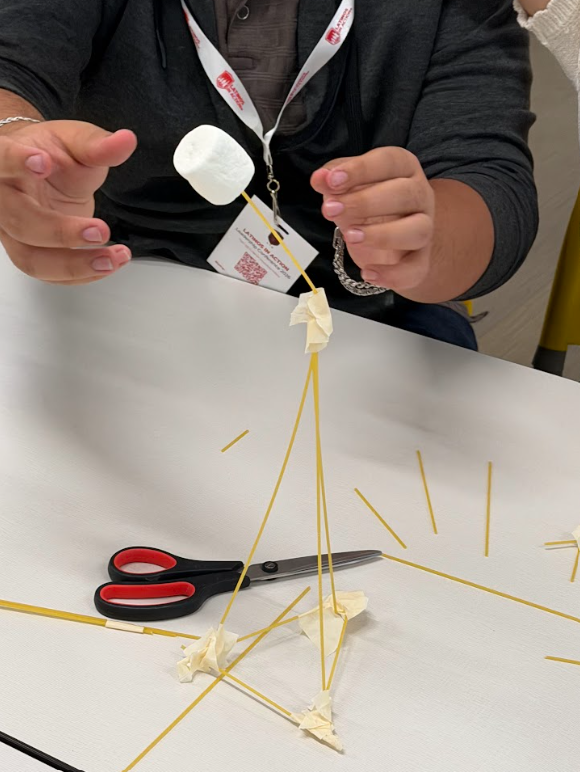
While the Marshmallow Challenge was certainly fun for all, it also served to create the conditions of authenticity, collaboration, self reflection and agency that the students could then bring to bear during the group work to build their own ecosystems of support. Many of these student leaders were meeting for the first time. And yet, simply being together in space intentionally created to center their voice created an immediate sense of connection.
Following the Marshmallow Challenge, the students reflected on the following questions:
- What did your team do well?
- What would you do differently next time?
- How did your team handle unexpected challenges?
- What does that teach you about problem-solving or leadership?
Student groups identified communication as essential to their collaboration. They noted that once they became comfortable with their new teammates, they felt more confident sharing ideas. When facing unexpected challenges—such as spaghetti breaking or an unstable foundation—students emphasized communication as the most effective way to work through obstacles. As they reflected on their experience, they also recognized problem-solving as a collective effort.
The Student-Designed Ecosystem of Support
After a break for lunch, students worked within their school teams to create their perfect ecosystem of support. Students identified that access to diverse resources and experiences plays a critical role in their growth as individuals, their academic success, and their ability to express creativity. They emphasized that learning is strengthened when students are connected to opportunities that extend beyond the classroom and allow them to explore their interests in meaningful ways.
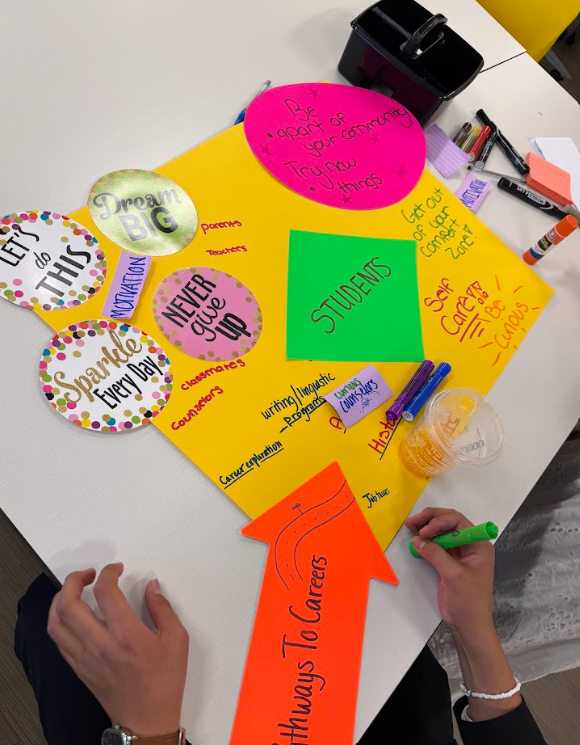
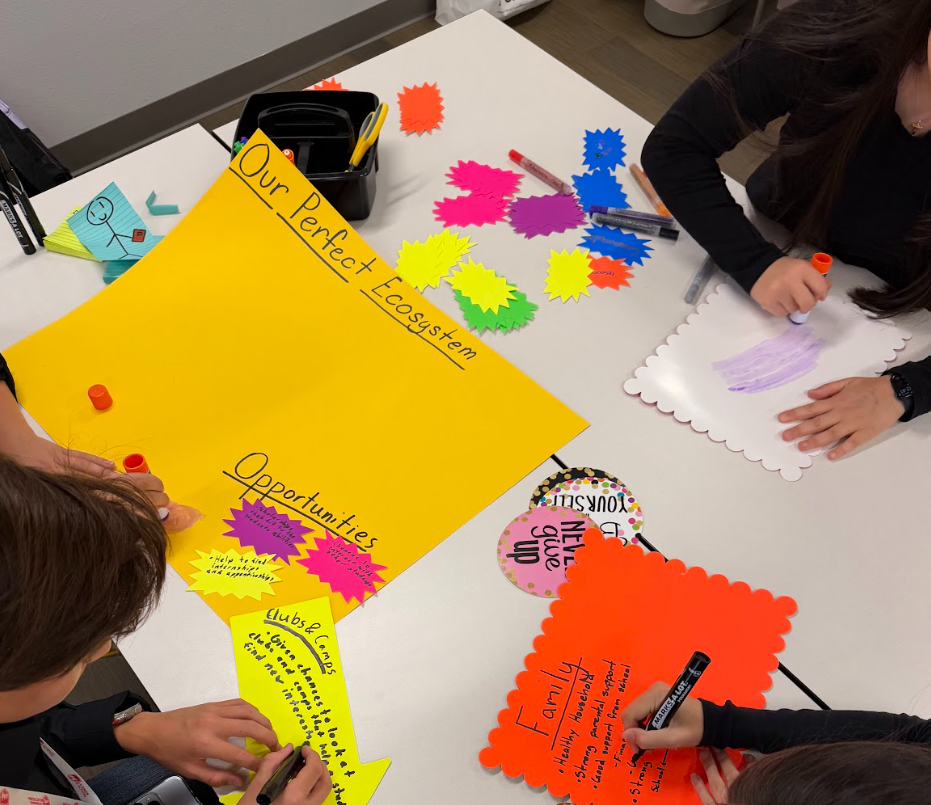
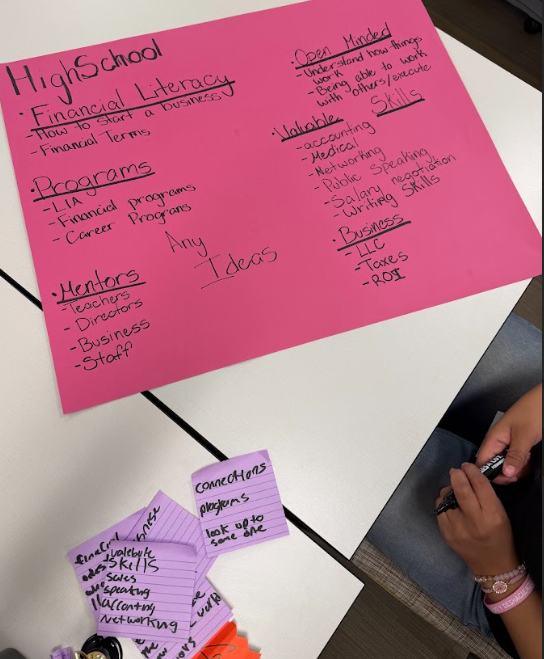
They also highlighted the importance of strong relational support systems, noting that counselors, advisors, and peer networks are essential in helping students navigate their next steps after high school. Students expressed the need for these supports to be visible, accessible, and intentionally connected to both students and families to ensure no one is left without guidance.
Once students had articulated their vision of a “perfect ecosystem,” they moved into the Liberatory Design practice of Notice and Reflect. They examined their current experience in relation to their ideal ecosystem by identifying what is already in place, what is missing, and what additional supports or conditions they needed.
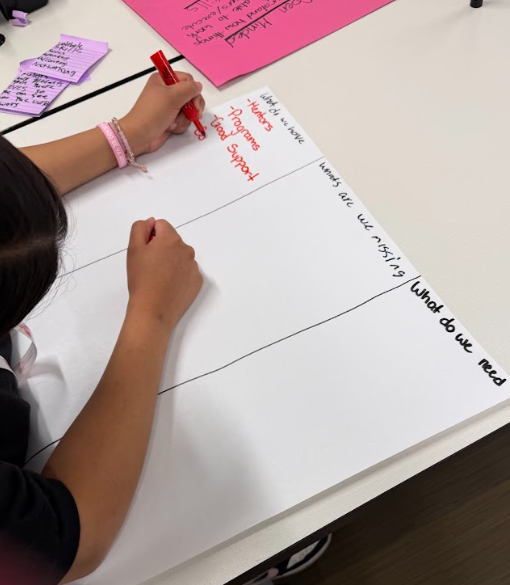
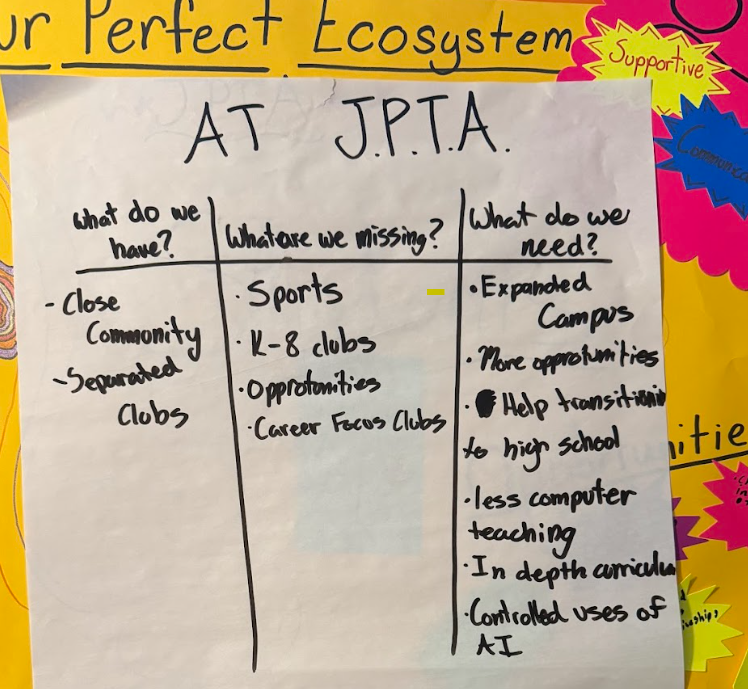
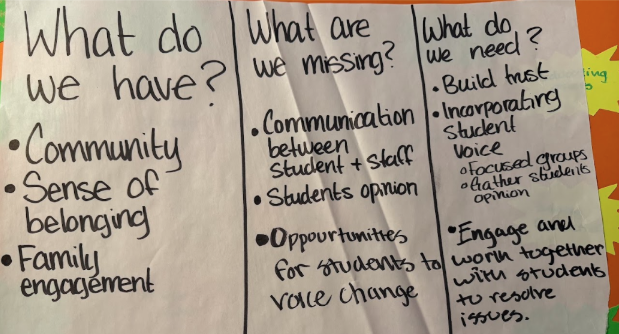
Their responses reveal a clear picture of relational strengths, structural gaps, and desired system improvements across academic, social, and emotional dimensions.
What Students Identified They Have
The students in our design session consistently described their current ecosystem as relationally rich and grounded in strong interpersonal supports. A dominant theme is the presence of positive relationships and connection, including motivation and encouragement from peers, counselors, and parents. They also emphasized strong teacher–student relationships, which contribute to trust and engagement in learning.
Students noted multiple layers of support systems and access points, including mentors, social workers, and programs that provide academic and emotional assistance. A sense of belonging and community connection was frequently highlighted, reinforced by family engagement, close-knit community ties, and grade-level clubs.
Some experiential learning opportunities were also present in their ecosystem, such as internships, hands-on projects, and college opportunities, which students viewed as meaningful pathways beyond traditional instruction.
In addition, students identified several aspects of their school environment that contribute to comfort and daily experience, including snacks, water machines, and some access to clubs and sports.
Overall, students described a system that contains strong relational capital, pockets of opportunity, and foundational supports that contribute to engagement and belonging.
What Students Identified They Missing
Students identified significant gaps in future readiness and academic relevance, particularly a lack of clarity around career pathways. They expressed that they are often not informed about postsecondary options or how current learning connects to future opportunities.
A second major theme was the need for expanded academic and extracurricular options, including more electives, additional classes, sports, and school clubs. Students also noted a desire for more specialized learning opportunities such as financial literacy, business skills, and other life-relevant coursework.
Students highlighted a gap in voice and communication structures, stating that student opinions are not consistently heard or integrated into decision-making processes. They pointed to limited opportunities for students to actively contribute to school change or improvement.
Another area of concern was access to supportive relationships and staffing, with students noting a need for more mentors and more open-minded teachers. They also identified gaps in behavioral and life support systems, including anger management classes and additional structured supports.
Finally, students pointed to basic facility and structural gaps such as insufficient bathrooms and limited availability of certain school programs, including K–8 clubs and career-focused classes.
What Students Identified They Need
When reflecting on what they needed to strengthen their ecosystem, students in the design session emphasized both expanded support systems and deeper structural investment in student well-being and opportunity.
A consistent priority was the need for additional adult and health supports, including more school counselors, a school nurse, and more staff overall. Students also called for mental health breaks and stronger systems that prioritize emotional well-being.
Students strongly emphasized the need for authentic student voice and partnership structures, including focus groups, mechanisms for gathering student input, and intentional efforts to build trust between students and staff. Incorporating student perspectives into decision-making was seen as essential to improving the school experience.
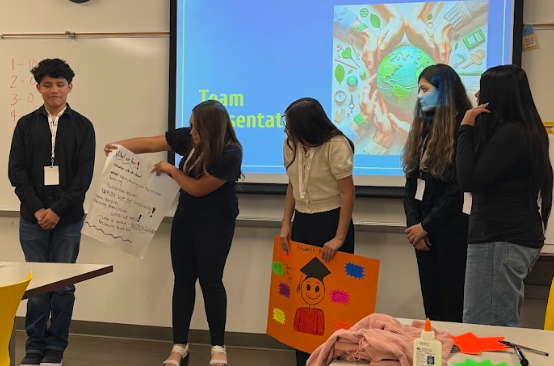
In terms of programming, students identified a need for more clubs, sports, and expanded academic offerings, along with increased opportunities for coursework that is relevant, rigorous, and engaging. They also expressed a desire for stronger support in transitioning to high school and more expansive learning environments, including an expanded campus.
Instructionally, students called for less computer-based teaching, a more in-depth curriculum, and clearer boundaries and guidance around AI use, reflecting a desire for more intentional and structured learning experiences.
Across responses, students also emphasized the importance of community connection, teamwork, and stronger relationships, reinforcing that their ideal ecosystem is one where academic, social, and emotional supports are fully integrated.
Designing Support With (not For) Students
Student success improves when school culture intentionally cultivates student agency and collaboration among educators, students, families, and communities. And likewise, listening and responding to student perspectives on the core elements of their own support networks ensures the structural ecosystem of student support adequately delivers what students need to succeed in school and beyond.
One thing that stood out to us about the design session was the genuine sense of community and pride among students as they shared with one another. It felt like they already belonged, even before they knew each other. That feeling was tangible. It showed how powerful it is when students are given a space to co-create, reflect, and share their voice in a setting that feels safe and affirming.
Authentic partnerships between educators and students are foundational to a student’s journey through school and beyond. Student agency and collaboration also provide several key ingredients to student success:
- Provides opportunities for students to be active participants in their journeys, as opposed to passive recipients of supports;
- Creates space for students to experience belonging, connectedness, student actionable voice, and ownership; and
- Facilitates continuous improvement.
During the design session in Albuquerque, students described an ecosystem of support that contains strong relational foundations and meaningful opportunities, but lacks coherence, consistency, and voice-driven design. Their “have–missing–need” analysis reveals a clear direction: strengthening pathways, expanding access, and building authentic student partnership structures that move students from being participants in the system to co-designers of it.
The session underscored a clear shift in how school systems can and should approach improvement: not by making decisions on behalf of students, but by designing with them. When students are positioned as partners in identifying strengths, naming gaps, and shaping solutions, the resulting insights are more grounded, more relevant, and more actionable. This allows students to take active ownership in their learning experience. Moving forward, the work is not simply to respond to student feedback, but to structurally embed students as co-designers in the decisions that shape their learning environments and future opportunities.